Retail Store Audit: The 12-Minute Checklist That Pays
A retail store audit should take about 12 minutes and change what the shelf looks like. Here is the walk-order checklist and the method behind it.


The shelf decides whether your product sells.
Your rep standing in the aisle is the only person who can see that shelf, fix it, and log it, all in the same few minutes. Mobile retail execution is the software that runs those minutes from a phone. It gets the rep to the right store, tells them what to check, and captures the visit before they reach the car.
That last part is where most tools quietly fail. A form built for a desk asks a rep to type in a cold aisle, and reps won't do it. So the visit goes unlogged, the shelf goes unaudited, and headquarters stays blind to the place where the money moves.
Mobile retail execution is the mobile-first system a field team runs store visits on. It plans the day, surfaces what to sell and what to audit at each stop, captures the order and the shelf by photo and voice, and syncs all of it back to the CRM and order systems you already run.
The mobile-first part is the whole argument for the category. Plenty of vendors sell desktop retail-execution software with a phone app stapled on. The app is a shrunk-down version of the office screen, and it shows: forms with 30 fields, dropdowns you can't hit with a thumb, a workflow that assumes you're sitting down. That design loses the moment it meets a real store.
Here's why the shelf deserves this much attention. CPG companies spend around 20% of revenue on trade promotions, and McKinsey finds that roughly 72% of US trade promotions don't break even. A lot of that money leaks in the aisle: the display never goes up, the promoted price never gets set, the planogram drifts and nobody at HQ can see it. Your rep in the door every week is the only fix, so the tool in their hand has to make that visit count without slowing it down.
The day starts before the rep does. A good mobile retail execution app plans the route overnight and hands over a morning brief: the stops, the order they come in, and what each one is for.
The discipline that matters is what the route optimizes for. Minimizing miles is the wrong target. The right one is revenue per day, and the highest-value stop is rarely the closest. Five mid-size accounts in one plaza can beat three scattered priority doors once you price in the driving between them. Good route optimization tools protect the anchor accounts that keep a standing day, then optimize everything around them.
At the store, the phone knows your rep has arrived. Location detection logs the visit on its own, no check-in tap required, and a visit the app spots but the rep never opens triggers a nudge. That's how logging compliance climbs toward complete instead of hovering wherever the rep's memory left it. Our guide to territory management goes deeper on sequencing a territory for revenue.
Before your rep walks in, the app pushes a battle card for that specific account. Not a data dump. The three things that decide this visit.
A good card carries the since-last-visit summary, the order trend, the voids to pitch, the promos this store qualifies for, and what to audit once inside. It reads in the time it takes to cross the parking lot. Tools built for this, like Beamly, read the card aloud so the rep hears it walking up instead of squinting at a screen. The rep walks in already knowing this store carries your cola but not your lemon-lime, and that the endcap they paid for last month should be up.
That prep is what turns a delivery stop into a selling stop. When your rep knows the two SKUs to push and the one display to check, they walk in with a plan for the conversation instead of a blank order form to fill.
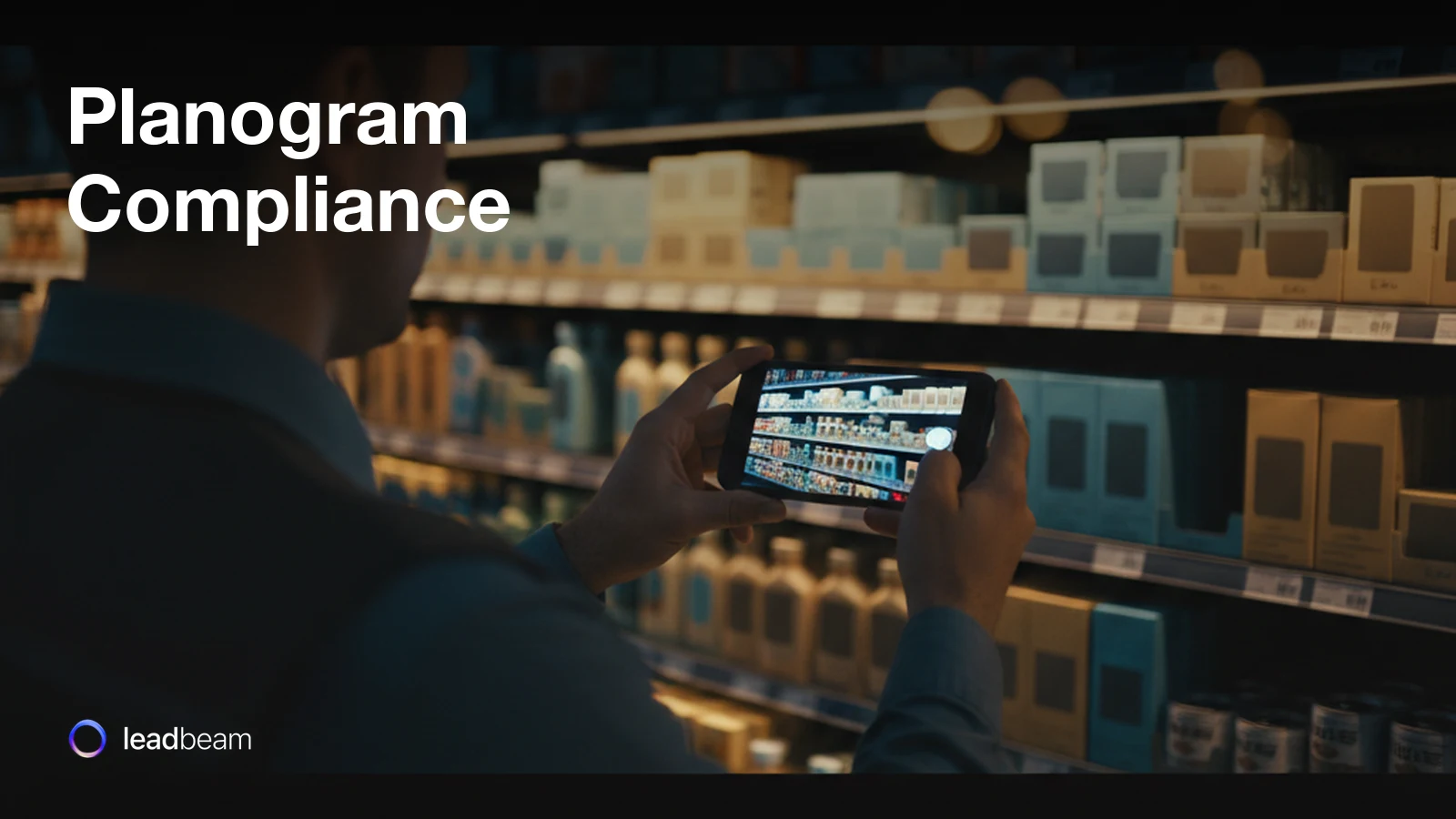
The audit is the point of the visit, and the discipline is to close the loop before you leave: look at the shelf, then fix what's wrong while you're still standing in front of it.
Great reps photograph the shelf they were going to check anyway, then work the gaps on the spot. Move the 12-packs to eye level. Put up the promo tag that's missing. Build the secondary display that never went in. A phone that already carries the account's planogram, through a capture tool like Pulse, reads the photo and hands back that gap list, so nobody counts facings into a form.
The management tradeoff is where this pays off. A paper checklist gives you a subjective "looks fine" with no way to verify it later. Tie the photo to the planogram and you get proof you can coach against, while the voids from the battle card close on the same screen the audit lives on. That turns your rep from a box-dropper into a shelf-level advisor who can show a store manager which SKUs to swap to grow the category, backed by what the shelf held.
The visit isn't done until it's captured, and capture has to happen at the curb.
The order is the first piece. Your ordering system already computes a suggested order for the account. The field app surfaces that suggestion, lets the rep adjust quantities against what they just saw on the shelf, and submits it through the system you already use. The field layer feeds the order engine; it doesn't try to replace your settlement, invoicing, or truck reconciliation. Those stay where they belong.
Then log the visit before you pull out of the lot. A 15-second voice note captures the owner's comment, the commitment, and the thing to follow up on while it's fresh, and it lands in the CRM structured instead of scrawled on a receipt.
The tradeoff here is adoption, not features. Reps spend just 28% of their week selling, per Salesforce, so anything that adds an evening of typing gets skipped, and skipped capture is the same as no tool at all. Voice-to-CRM is how the note gets logged at the curb instead of reconstructed at 8 p.m.
Everything above depends on one design choice: the software assumes the user is standing up, moving, and short on time.
A retrofit doesn't. It was built for an analyst at a keyboard and then miniaturized, so it fights the rep at every step the field cares about. That's the mobile-first versus desktop-retrofit line, and it decides adoption more than any feature list. The reason field software fails is almost never the feature set. It's that reps won't use it, and a tool nobody uses returns nothing regardless of what it can do. Anything you evaluate should be judged on whether a rep would run it one-handed in a cooler aisle, which is also the bar for any mobile CRM worth adopting.
When capture happens at the curb, one more thing changes: headquarters finally sees the shelf. Compliance state rolls up by territory, so "shelf compliance below 60%" becomes a filter a leader can point reps at, instead of a guess pulled from whatever reps remembered to report.
Take a short list into every demo. A real mobile retail execution solution clears all of it.
If you change one thing this quarter, move capture to the curb. When your team logs the order, the shelf, and the visit on the phone that's already in the rep's hand, every store call turns into data your leaders can see and coach against. The team still writing it up at 8 p.m. is guessing about the exact shelf where its trade dollars live, and for field-heavy FMCG teams, that guess is the most expensive line on the field budget.


Leadbeam Blog
Discover tips, strategies, and success stories to empower your field sales team and drive results.