Smoke Shop POS: The Under-30 ID Rule Is Your Opening Line
Smoke shop POS sales start with compliance, not features. Four questions on age checks, product lists, tax rates and shipping to ask before you demo.

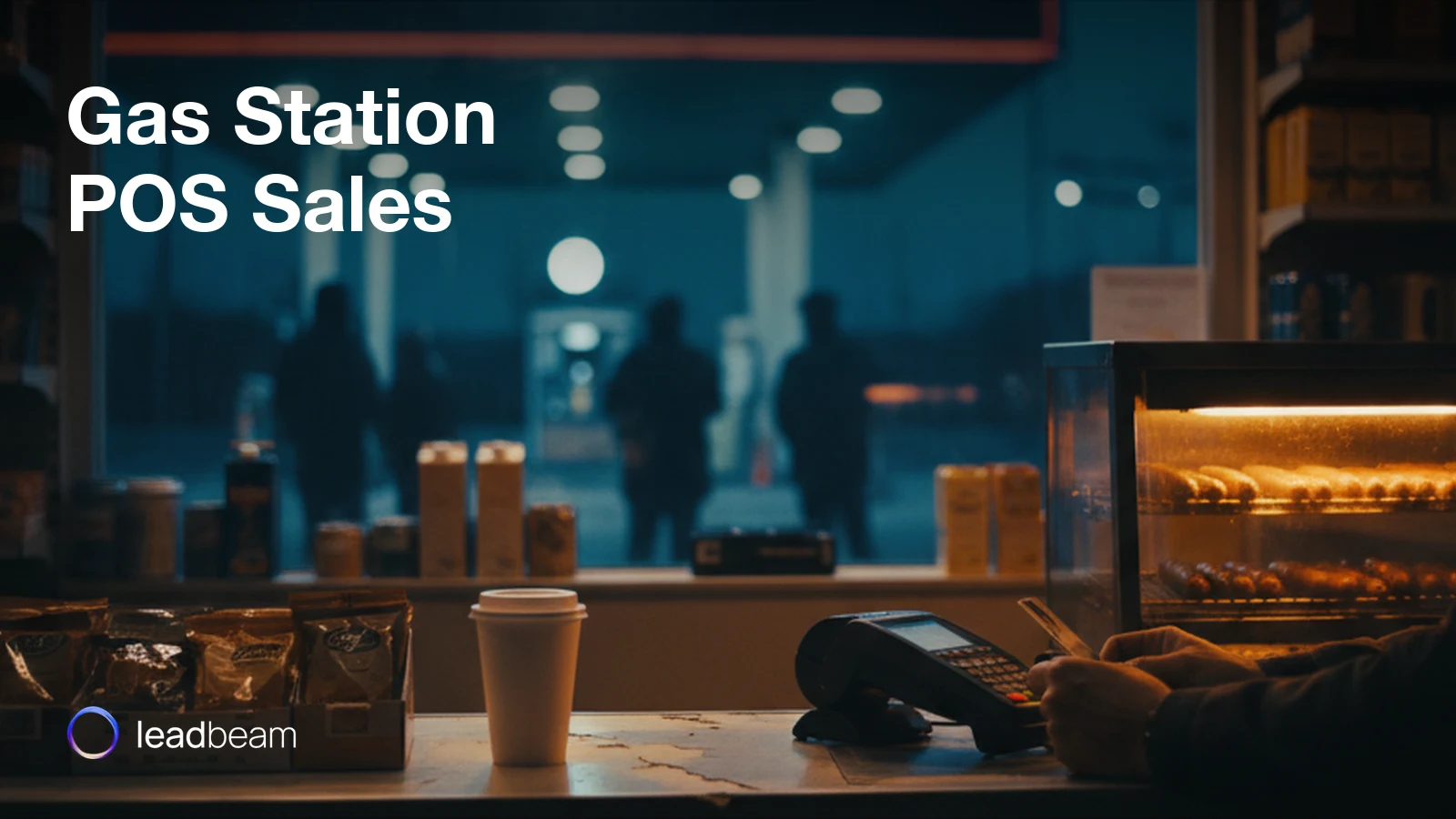
It's 6:40 AM, and you're standing at the end of a gas station counter. The clerk rings up a coffee, a pack of cigarettes, and a lottery ticket in under a minute. Behind the customer, the line is already five deep. The owner is watching the line, then watching you.
Most gas station POS pitches start at the pump, because that's what the sign out front advertises. You've probably run that pitch. The owner nods, takes your card, and never calls back.
The numbers explain the silence. At U.S. convenience stores in 2025, fuel was 65% of sales dollars but only 39% of gross profit dollars. The store behind the pumps earned the rest.
So where inside the store does a POS rep win the room?
Start with the food. Foodservice led the in-store categories in 2025, at 28.5% of in-store sales and a bigger share of in-store gross profit, and prepared food was most of it. If you've sold restaurant tech, the hot-food counter will look familiar. It's the same kitchen business, bolted onto a fuel site.
Now add volume. The average store rang up 1,484 transactions a day, fuel and in-store combined. A register that slows a mixed basket slows the whole line, and a slow line is the first thing an owner feels on a busy morning.
So demo the mixed basket. Ring up a coffee, a hot-food item, and a pack of cigarettes in the order the clerk just did, and let the owner time it against the system they use now.
Before you pull out a tablet, watch ten minutes of real ring-ups. Build the demo around what you saw.
Roughly 123,000 U.S. convenience stores sell fuel, and 63% of all convenience stores belong to companies with 10 or fewer locations.
That shapes your territory. At a small operator, the person behind the counter is often the owner or reports straight to one, so your first visit can reach the decision-maker. Build your list by owner, not just by address. Sites that share an owner are one conversation, and one good visit can open several stores. The walk-in basics still apply to the first minute, but the list you build before you leave the car is what saves you drive time.
Then check who else holds a vote. Ask early whether a fuel supplier or a branded-site agreement has a say in payment hardware. If it does, the counter is only your first stop.
Here's the catch most reps miss. Tobacco is the one category where the register's capabilities decide the owner's income.
Altria's retailer incentive program requires an electronic ID scan on tobacco purchases. About 162,000 stores were validated in the program in 2025.
The program runs in tiers. Tier 1 pays incentives per tobacco transaction on scan data, and Tier 3 adds electronic age and identity verification. Ask which tier the store sits in today and what its register does when a pack scans, instead of asking whether the owner wants a new register.
A shrug is your opening.
A POS that reads the ID, submits the data, and codes funded promotions correctly turns a compliance chore into income the owner can see. Offer to work the number from the store's own weekly tobacco volume, and leave out any dollar figure you can't back up.
Credit and debit card fees hit a record $21.3 billion across the industry in 2025. Your owner already has a number in mind for their own site.
Last month's processor statement shows what the site pays, who the processor is, and whether the pump terminals and the register are tied together. That last answer tells you how much of the old system you're replacing, which tells you how big a job you're quoting before you quote it.
Ask these in order. Write the answers down before you leave the lot.
The visit isn't over when you leave the counter.
You're back in the car with the engine running and the smell of the roller grill still on your jacket. You have four facts worth keeping: the owner's name, the tobacco program tier, who else has a say, and the next step. Lose one and the second visit starts from zero. For the next two weeks, add three more numbers to the note: counters visited per day, minutes spent at each, and days from the first counter conversation to a signed quote. That gives you a daily-motion baseline built on your own route, not one copied from another vertical.
Typing four notes on a phone in a crowded lot is where most of that detail dies, which is why reps skip CRM logging in the first place. Voice-to-CRM tools like Leadbeam's Pulse let you say them out loud and move on to the next stop. Capture is the unglamorous half of any field sales operating system.
Picture the 6:40 AM line again. Fuel gets the cars to stop, and the register is where the owner's margin gets rung up. Now you know what to say to the person behind it. Which counter on your route gets your first ten minutes this week?
If you want the wider motion behind this, start with field sales prospecting for SMB teams.


Leadbeam Blog
Discover tips, strategies, and success stories to empower your field sales team and drive results.