
Retail Store Audit: The 12-Minute Checklist That Pays
A retail store audit should take about 12 minutes and change what the shelf looks like. Here is the walk-order checklist and the method behind it.

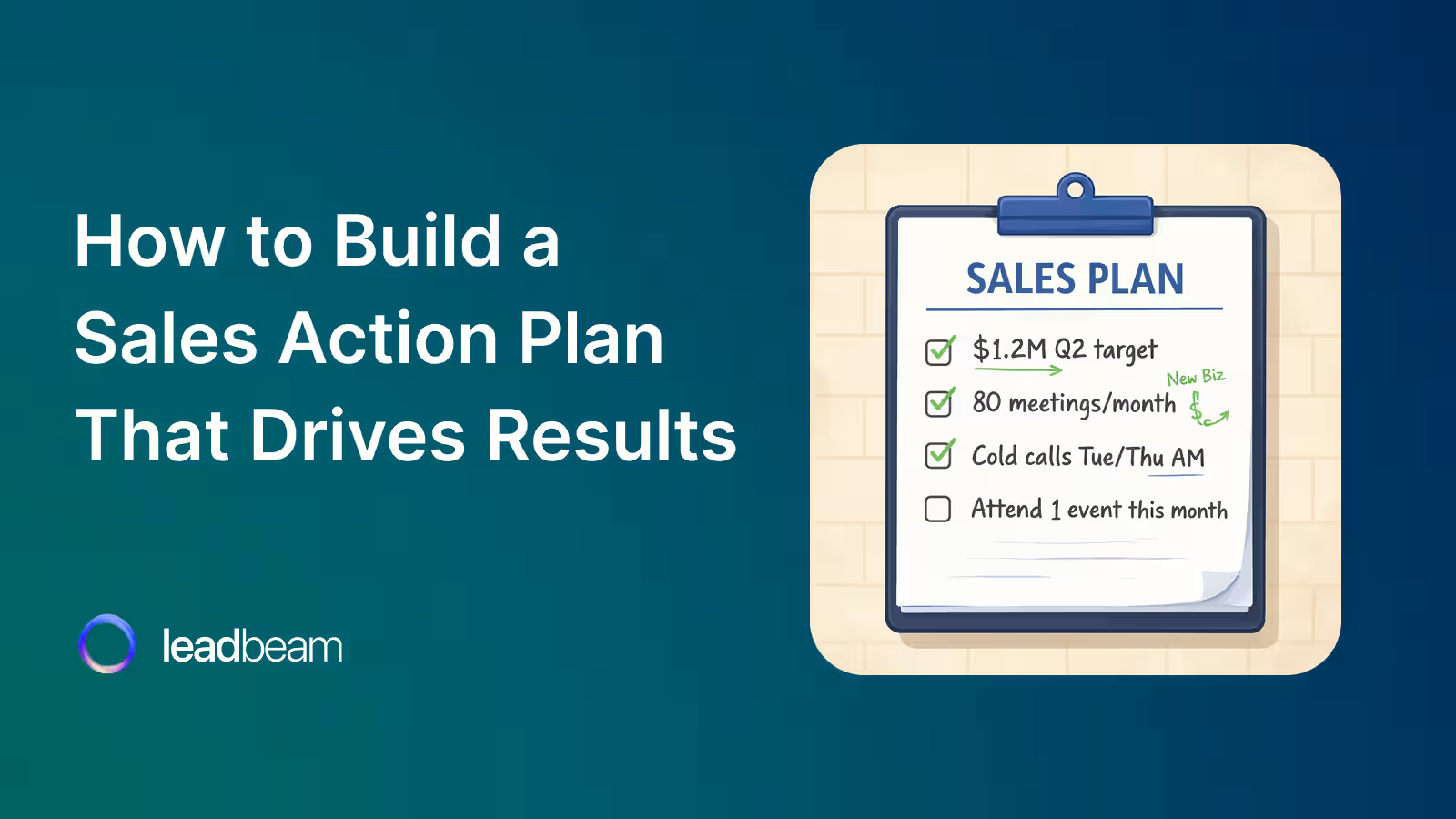
Most sales teams have goals. Fewer have a plan to hit them.
A sales action plan bridges the gap between "we need to grow revenue 20%" and the specific activities that make it happen. Without one, reps default to whatever feels urgent rather than what moves the needle. Managers lose visibility into whether the team is on track until it's too late to course-correct.
If you've ever ended a quarter wondering where the time went—or why pipeline didn't convert—the problem likely isn't effort. It's the lack of a structured sales planning process that connects targets to tactics to daily execution.
This guide covers how to create a sales plan that actually drives results. You'll learn the core components of a sales action plan, see a sales plan example you can adapt, and walk away with a framework for building your own sales strategy plan.
A sales action plan is a document that translates revenue goals into specific activities, timelines, and accountability. It answers three questions:
Unlike a high-level sales strategy that outlines vision and direction, an action plan gets granular. It specifies the number of calls, meetings, demos, and follow-ups required to hit targets—and assigns those activities to specific people on specific timelines.
For field sales teams, this level of detail matters. Reps working territories need clarity on which accounts to prioritize, how many visits to complete weekly, and what milestones signal progress toward quota.
Before building your plan, understand why most fail:
Too vague. "Increase sales" isn't actionable. Neither is "focus on enterprise accounts." Effective plans specify measurable outcomes and the activities that produce them.
No connection to daily work. A quarterly revenue target means nothing if reps don't know what to do on Monday morning. The best plans break goals into weekly and daily activities.
Set and forgotten. Plans that live in a drawer (or a shared drive nobody opens) don't drive behavior. Effective plans get reviewed weekly and adjusted based on results.
Unrealistic assumptions. Plans built on wishful thinking—"we'll double meetings without changing anything"—collapse on contact with reality. Good plans are grounded in historical conversion rates and capacity constraints.
Every sales action plan begins with a number. What revenue do you need to generate this quarter or year? Break that target down:
Be specific. "Grow revenue" is a hope. "$1.2M in Q2, with $800K from new logos and $400K from expansions" is a goal you can plan for.
Once you have revenue targets, calculate the activity required to hit them. This requires knowing (or estimating) your conversion rates at each stage:
Example: If you need $200K in new revenue with an average deal size of $20K, you need 10 closed deals. If your win rate is 25%, you need 40 qualified opportunities. If 33% of meetings become opportunities, you need 120 meetings. If 10% of outreach converts to meetings, you need 1,200 touches.
Now you have activity targets: 1,200 outreach touches → 120 meetings → 40 opportunities → 10 deals → $200K.
With activity targets set, determine how you'll generate that activity. For field sales teams, tactics might include:
Each tactic should have a clear owner and timeline. Don't just say "attend events"—specify which events, who's attending, and expected lead count.
For effective territory management, segment accounts by potential value and visit frequency. This ensures high-value accounts get appropriate attention while maintaining coverage across the territory.
A plan without accountability is a wish list. For every tactic and activity:
Create a simple tracking mechanism—a shared spreadsheet or your CRM's task system—where owners update progress weekly.
Plans need regular check-ins to stay relevant. Establish:
These reviews shouldn't be status updates that waste everyone's time. Focus on what's working, what's not, and what changes to make. Keep them short and action-oriented.
Write the plan down. A plan that exists only in your head can't align a team. Include:
Share it with everyone accountable for results. Make it easy to access and reference. If reps can't find the plan, they can't follow it.
Here's a simple structure you can adapt:
Section 1: Goals
Section 2: Activity Targets (4-Rep Team)
Section 3: Tactics
Section 4: Review Cadence
Here's how a real sales action plan might look for a five-person field team with a $2M quarterly target:
The Math:
Weekly Activity Targets Per Rep:
Key Tactics:
Review Rhythm:
This plan gives every rep clarity on exactly what to do each day and week, while giving managers visibility into whether activity levels will produce results.
Overcomplicating the plan. A 20-page document nobody reads is worse than a one-page plan everyone follows. Start simple and add complexity only if needed.
Ignoring capacity constraints. If reps are already at 100% utilization, adding new activities without removing others guarantees failure. Be realistic about what's achievable.
Planning in isolation. Plans built without rep input get ignored. Involve the team in setting activity targets—they know what's realistic in their territories.
Measuring only outcomes. If you only track revenue, you won't know why you're missing until it's too late. Track leading indicators (activity, pipeline) alongside lagging indicators (closed revenue).
Skipping the "why." Reps execute better when they understand the logic behind targets. Explain the math. Show how activities connect to outcomes.
The best sales action plan means nothing if the team doesn't execute it. A few tactics to drive adoption:
Make it visible. Post key metrics on a shared dashboard. When activity targets are public, accountability increases.
Celebrate progress. Recognize reps hitting activity targets, not just revenue. This reinforces that the process matters.
Remove friction. If logging activities takes too long, reps won't do it. Invest in tools that make CRM updates effortless—voice notes, mobile apps, automatic logging.
Address misses quickly. When someone falls short of activity targets, have a conversation within 48 hours. Don't wait for the quarterly review to discover problems.
A sales plan typically outlines high-level strategy—target markets, competitive positioning, and annual goals. A sales action plan gets tactical, specifying the exact activities, timelines, and owners required to execute that strategy. Think of the sales plan as "what" and the action plan as "how."
Review weekly and adjust monthly. Weekly reviews catch activity shortfalls early. Monthly reviews allow for tactical adjustments based on what's working. Major revisions should happen quarterly or when significant changes occur (new product, market shift, team changes).
At minimum: revenue targets broken down by period and rep, activity targets with the math behind them, specific tactics with owners and deadlines, and a review cadence. Optional additions include competitive responses, risk mitigation, and escalation procedures.
Start with historical data. Look at your actual conversion rates over the past 6-12 months. If you don't have data, use industry benchmarks and adjust as you learn. The key is building in a buffer—if the math says you need 100 meetings, plan for 120 to account for variability.
Start with your top performers—if they adopt it, others follow. Keep the plan simple enough that reps can recall their weekly targets without looking it up. Most importantly, managers should reference it in every 1:1 and team meeting. A plan that only lives in a shared drive won't change behavior.
A sales action plan turns ambition into execution. It connects revenue targets to daily activities, gives reps clarity on priorities, and gives managers visibility into whether the team is on track.
The sales planning process doesn't need to be complicated. Start with clear goals, work backwards to activity targets, assign ownership, and review regularly. A simple plan that gets followed beats a sophisticated plan that gets ignored.
The real test? Whether every rep knows exactly what to do Monday morning. If they don't, the plan isn't working. Request a demo to see how Leadbeam helps field teams plan territories, track activities, and keep every rep aligned with the plan.


Leadbeam Blog
Discover tips, strategies, and success stories to empower your field sales team and drive results.